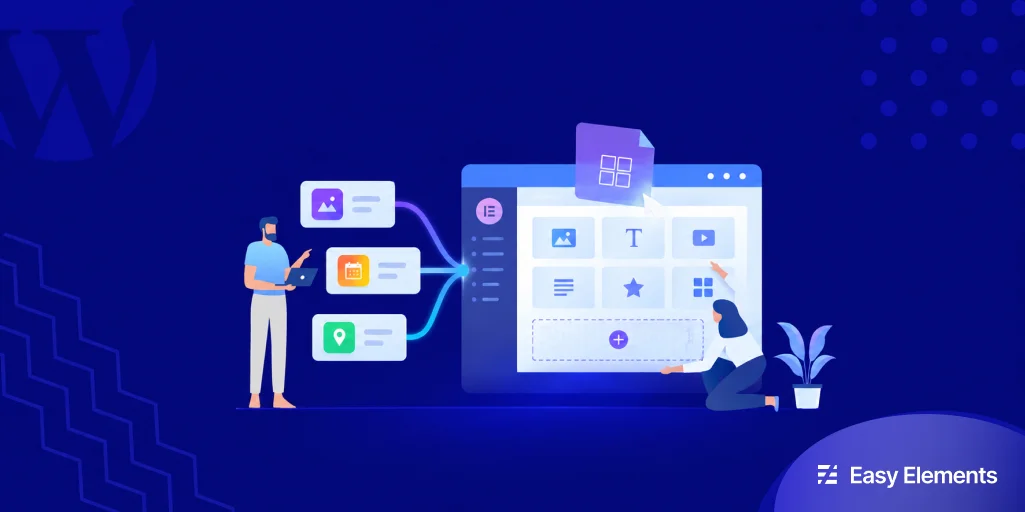

Elementor addons expand the core capabilities of Elementor, allowing you to design more polished, flexible, and high-performing websites. While Elementor provides a solid foundation, addons introduce advanced widgets, layout controls, and styling options that help overcome design limitations without custom code.
By adding features like dynamic content, interactive elements, and pre-built design components, Elementor addons like Easy Elements improve both visual appeal and user experience.
In this article, we’ll look at how these addons elevate website design by making pages more engaging, consistent, and conversion-focused.
How Elementor Addons Can Improve Website Design
Elementor addons can significantly elevate website design by extending what the core Elementor builder can do, both visually and functionally. When used strategically, they help designers move beyond basic layouts and create richer, faster, and more conversion-focused experiences without writing custom code.
Expanding design possibilities beyond core widgets
Elementor’s default widgets are powerful, but addons unlock advanced design elements that allow you to build more complex and visually engaging layouts. Addons typically introduce widgets like advanced sliders, post grids, timelines, interactive cards, comparison tables, and animated headlines. These elements help break the monotony of static pages and allow designers to present content in more dynamic and engaging ways.
From a design perspective, this means greater creative freedom. Instead of forcing a layout to work with limited widgets, addons let you design sections that naturally fit your content goals. This is especially valuable for landing pages, SaaS websites, portfolios, and directories where visual differentiation plays a major role in user perception.
Improving visual consistency and branding
Elementor addons often come with global styling controls, preset designs, and reusable blocks that help maintain consistency across an entire website. Designers can apply the same typography styles, spacing rules, hover effects, and color schemes across multiple pages without repeating manual adjustments. This consistency strengthens brand identity and creates a more professional, cohesive look.
Many addons also offer theme builder enhancements, allowing headers, footers, and dynamic templates to align perfectly with brand guidelines. This ensures that every touchpoint, from blog posts to product pages, feels intentional rather than pieced together.
Enhancing user experience with interactive elements
Modern users expect interaction, not just information. Elementor addons introduce interactive features such as hover animations, scroll-based effects, accordions, tabs, progress indicators, and interactive popups. These elements guide users through content more intuitively and reduce cognitive load by revealing information only when needed.
When used thoughtfully, these interactions improve engagement without overwhelming users. For example, expandable sections can keep pages clean while still offering depth, and animated call-to-action elements can subtly draw attention without feeling intrusive.
Speeding up the design and development process
One of the biggest advantages of Elementor addons is efficiency. Pre-built sections, templates, and widget presets drastically reduce design time. Instead of building layouts from scratch, designers can customize ready-made components to fit the project’s needs. This is particularly useful for agencies or product teams working on multiple websites or frequent updates.
Additionally, many addons eliminate the need for custom CSS or JavaScript for common design patterns. This not only speeds up development but also reduces the risk of errors and maintenance issues later on.
Supporting advanced layouts without coding
Complex layouts such as mega menus, sticky sections, dynamic content grids, and conditional displays can be difficult to implement without technical knowledge. Elementor addons simplify these advanced use cases by offering intuitive controls directly inside the editor. Designers can create sophisticated layouts visually, making high-end design more accessible.
This democratization of design allows non-developers to build websites that previously required custom development, which is especially beneficial for startups, small businesses, and content creators.
Boosting conversion-focused design
Many Elementor addons are built with marketing and conversion optimization in mind. Features like advanced forms, countdown timers, testimonials, pricing tables, popups, and CTA widgets help guide users toward specific actions. These elements can be styled and positioned precisely, ensuring they align with the overall design rather than feeling like afterthoughts.
When design and conversion elements work together seamlessly, websites not only look better but also perform better. This is crucial for businesses focused on lead generation, sales, or user sign-ups.
Enabling scalability and future design growth
As websites grow, design needs become more complex. Elementor addons make it easier to scale design systems by offering modular components and dynamic content capabilities. This allows designers to update layouts, add new sections, or introduce new features without redesigning the entire site.
Because addons evolve with regular updates and new widgets, they also help future-proof design decisions. Websites can adapt to new trends and requirements while staying visually consistent and technically stable.
Final Thoughts
Elementor addons are not just decorative tools; they are design enablers. When chosen carefully and used with purpose, they enhance creativity, improve user experience, speed up workflows, and support conversion-driven design. For anyone serious about building modern, high-performing websites with Elementor, addons are a practical and powerful investment rather than an optional extra.