
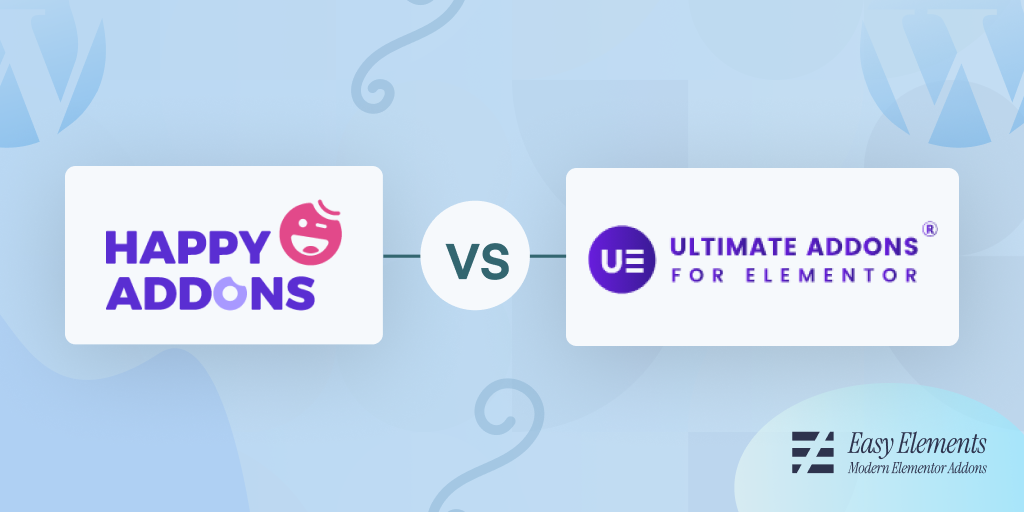
Happy Addons vs Ultimate Addons— which is better for Elementor?
Happy Addons is ideal for users who want a wide range of widgets, creative flexibility, and ready-made templates. Ultimate Addons, on the other hand, is best for those who prioritize speed, performance, and clean coding.
Both plugins enhance Elementor’s capabilities, but they serve different purposes. Happy Addons focuses on design freedom and feature-rich experiences, while Ultimate Addons emphasizes efficiency and lightweight performance.
In this detailed comparison guide, we break down everything from widgets and speed to pricing and real-world usability so you can confidently choose the best Elementor addon for your website.
What Is Happy Addons?
Happy Addons is a feature-packed Elementor addon developed to maximize design creativity and reduce development time. It’s widely popular among beginners, freelancers, and agencies that need visually engaging websites without coding.
Core Features of Happy Addons
- 140+ Widgets & Extensions: Covers marketing, UI, and advanced design elements
- Live Copy-Paste: Instantly copy sections between websites
- Cross-Domain Copy: Move designs across different domains
- Pre-Built Templates: Ready-made sections and pages
- Advanced Effects: Floating effects, transforms, animations
- Mega Menu Builder
- WooCommerce Widgets
Strength
Happy Addons excels in design flexibility and speed of development, making it perfect for rapid website building.
What Is Ultimate Addons?
Ultimate Addons is a performance-focused Elementor extension built with clean, optimized code. It’s designed for professionals who want reliability, stability, and fast-loading websites.
Core Features of Ultimate Addons
- 50+ High-Quality Widgets
- Modular Architecture (Enable/Disable Widgets)
- Lightweight & Performance Optimized
- Consistent UI/UX
- Schema & SEO-Friendly Elements
- Deep Elementor Integration
Strength
Ultimate Addons stands out for its speed, efficiency, and minimal bloat, making it ideal for high-performance websites.
Happy Addons vs Ultimate Addons: Key Differences
| Feature | Happy Addons | Ultimate Addons |
|---|---|---|
| Best suited for | Beginners & designers | Professionals & agencies |
| Widgets | 140+ widgets | ~50 widgets |
| Pricing | Lower entry, yearly plans | Premium pricing, yearly |
| Performance | Feature-heavy | Lightweight & optimized |
| Templates | Large library | Smaller but refined |
| Unique strength | Creative features | Stability & speed |
Why We’re Comparing Happy Addons and Ultimate Addons
When using Elementor, addons can completely transform what you can build.
Out of the many Elementor extensions available today, two names consistently stand out:
- Happy Addons
- Ultimate Addons for Elementor
Both tools enhance Elementor, but they target different types of users.
- One focuses on creative flexibility
- The other focuses on performance and reliability
This guide helps you decide which one fits your workflow.
Happy Addons vs Ultimate Addons: Head-to-Head Comparison
1. Pricing
Unlike some plugins, both addons offer free and premium versions, but the real value lies in their Pro plans.
Happy Addons Pricing
- Lower entry cost
- Multiple tiers for scaling
- Affordable for beginners
Ultimate Addons Pricing
- Slightly higher pricing
- Focus on professional users
- Often bundled with Astra ecosystem
The Verdict
If you’re starting and want budget-friendly flexibility, Happy Addons is more accessible.
However, for long-term professional use, Ultimate Addons delivers better value through stability and optimization.
2. User-Friendliness
Ease of use is critical, especially for Elementor users.
Happy Addons
- Beginner-friendly interface
- Drag-and-drop enhancements
- Ready-made presets
- Less technical setup
Even first-time users can build complex layouts quickly.
Ultimate Addons
- Cleaner, more structured interface
- Fewer distractions
- Requires slight familiarity with Elementor
It’s easier to maintain consistency but less “playful.”
The Verdict
- Beginners → Happy Addons
- Experienced users → Ultimate Addons
3. Widgets & Features
This is where the biggest difference appears.
Happy Addons
Offers:
- 140+ widgets
- Advanced animations
- Creative elements (cards, grids, effects)
- Marketing tools (testimonials, pricing tables)
It emphasizes design freedom.
Ultimate Addons
Offers:
- ~50 high-quality widgets
- Essential business elements
- Clean and consistent UI components
It emphasizes practical functionality.
The Verdict
- Want more features → Happy Addons
- Want reliable essentials → Ultimate Addons
4. Templates & Design
Happy Addons
- Large template library
- Pre-built sections and pages
- Faster site creation
However, quality may vary across templates.
Ultimate Addons
- Smaller template library
- Higher design consistency
- Better structured layouts
The Verdict
This round is close, but:
- Quantity → Happy Addons
- Quality → Ultimate Addons
5. Performance Impact
Performance is where things get serious.
Happy Addons
- Feature-rich → heavier
- Can slow down sites if overused
- Requires optimization
Ultimate Addons
- Lightweight architecture
- Built for speed
- Better Core Web Vitals performance
The Verdict
Ultimate Addons clearly wins in performance and speed optimization.
6. Support Options
Both plugins provide solid support systems.
Happy Addons
- Documentation
- Tutorials
- Support tickets
Ultimate Addons
- Extensive knowledge base
- Professional support
- Strong community
The Verdict
Both are equally reliable, with no major difference in support quality.
Final Thoughts
Choosing between Happy Addons and Ultimate Addons for Elementor ultimately comes down to how you build websites with Elementor and what you prioritize most.
Happy Addons is the better choice if your focus is on creative freedom, visual experimentation, and fast design execution. Its large collection of widgets, animations, and ready-made templates makes it especially appealing for beginners, designers, and anyone who wants to build eye-catching websites without much technical effort.
On the other hand, Ultimate Addons stands out for its performance, stability, and professional-grade workflow. With a more refined set of widgets and a lightweight structure, it’s better suited for developers, agencies, and users building scalable, long-term projects where speed and consistency matter.