


Elementor has become one of the most popular WordPress page builders because it allows anyone to create visually appealing websites without writing code. Its drag-and-drop editor, extensive widget library, and design flexibility make it a favorite among freelancers, agencies, and business owners alike.
However, creating an attractive website is only one part of the equation. Performance has become equally important. A slow website can frustrate visitors, lower search engine rankings, reduce conversions, and negatively affect the overall user experience. While many Elementor websites suffer from unnecessary bloat and slow loading speeds, professionally developed websites consistently achieve excellent performance scores.
The difference lies in the development process. Professional agencies don’t rely solely on Elementor’s visual builder. They follow a structured workflow that emphasizes clean design, efficient coding practices, optimized assets, and ongoing performance improvements. Every decision, from selecting hosting to organizing page layouts, is made with speed and scalability in mind.
This guide explores the techniques professional agencies use to build fast Elementor websites that deliver outstanding user experiences while maintaining flexibility for future growth.
Why Website Speed Is Critical
Website performance directly influences how visitors interact with a website. Modern users expect pages to load almost instantly, and delays of even a few seconds can cause users to abandon a site before it finishes loading.
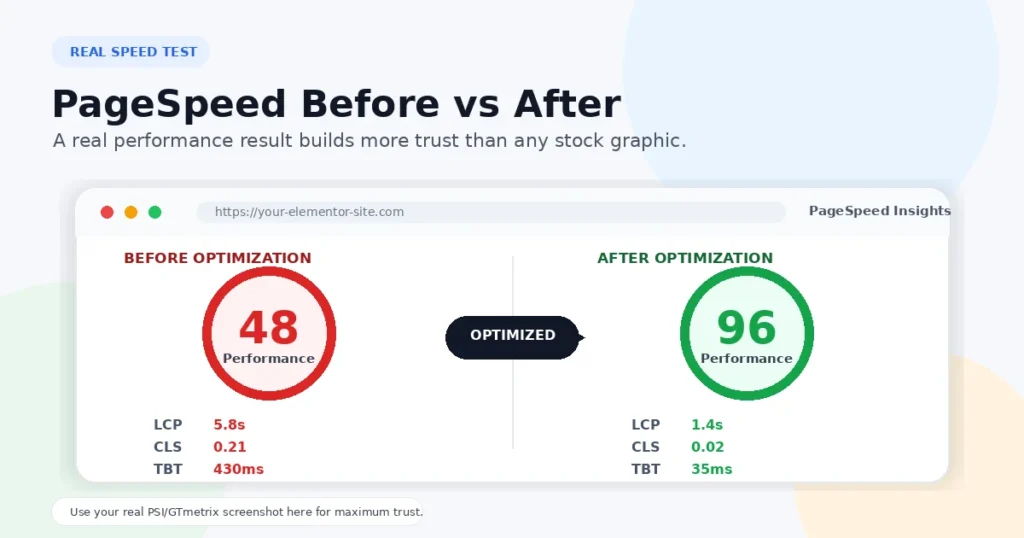
Search engines also consider page speed when evaluating websites. Google’s Core Web Vitals measure loading performance, responsiveness, and visual stability. Websites that perform well in these metrics are more likely to provide better user experiences and stronger search visibility.
Fast websites also contribute to higher engagement, lower bounce rates, increased conversions, improved customer satisfaction, and better long-term business results.
Professional Agencies Start With the Right Foundation
Many website owners focus entirely on design while overlooking the infrastructure that powers the website. Professional agencies understand that a fast website begins long before the first page is designed.
1. Choosing high-performance hosting
Reliable hosting is one of the most important factors affecting website speed. Agencies typically choose managed WordPress hosting or cloud-based solutions that provide modern server technology, optimized PHP versions, server-side caching, and fast storage.
A powerful hosting environment reduces server response time and ensures websites remain responsive during periods of heavy traffic.
2. Selecting lightweight themes
Rather than using feature-heavy themes that include unnecessary page builders, animations, and bundled plugins, agencies prefer lightweight themes designed specifically for performance.
Popular choices include Hello Elementor, Astra, GeneratePress, Kadence, and Blocksy because they provide clean code without sacrificing customization.
Using a lightweight theme allows Elementor to generate only the resources needed for each page instead of loading excessive CSS and JavaScript.
3. Building pages with performance in mind
Professional agencies rarely design pages by simply dragging and dropping widgets until the layout looks complete. Every section is carefully planned to balance visual appeal with technical efficiency.
4. Reducing layout complexity
Simple layouts usually perform better than overly complex designs.
Instead of creating numerous nested containers and overlapping sections, agencies organize content using clean structures that minimize HTML output while maintaining attractive designs.
Cleaner layouts also improve accessibility, simplify future maintenance, and reduce browser rendering time.
5. Using global styles
Global styles allow agencies to define typography, colors, buttons, and spacing once, then apply them throughout the entire website.
This approach creates design consistency while reducing duplicated CSS across multiple pages.
When branding changes are required, updates can be applied globally without editing each page.
6. Creating reusable templates
Professional developers avoid rebuilding identical sections repeatedly.
Headers, footers, call-to-action sections, pricing tables, testimonials, and contact blocks are saved as reusable templates. This not only speeds up development but also reduces inconsistencies across the website.
Optimizing Elementor Features
Elementor includes several built-in performance improvements that many beginners never enable.
Professional agencies always review Elementor’s optimization settings before launching a website.
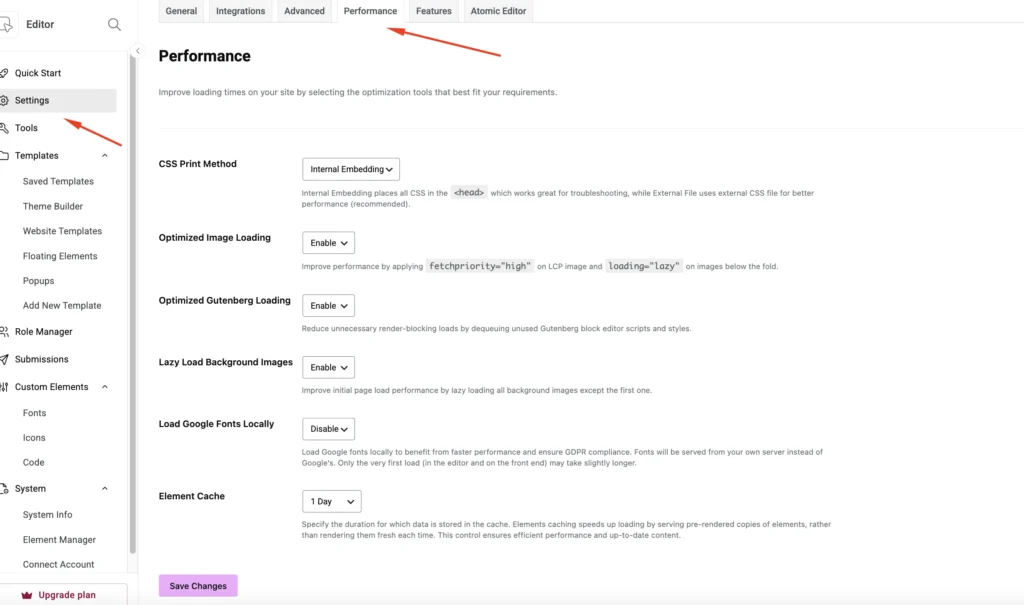
i. Optimized DOM output
Optimized DOM Output reduces unnecessary HTML wrappers generated by Elementor.
A cleaner Document Object Model decreases page complexity and helps browsers render pages more efficiently.
ii. Improved asset loading
Elementor can load JavaScript and CSS only when required, rather than loading every resource on every page.
Conditional asset loading significantly reduces page size.
iii. Flexbox containers
Most agencies now build websites using Flexbox Containers instead of the older section-and-column structure.
Containers produce cleaner HTML, improve responsiveness, simplify layouts, and reduce unnecessary code generation.
Minimizing Elementor Widgets
Every widget added to a page introduces additional HTML, CSS, or JavaScript.
Professional agencies carefully evaluate whether each widget actually contributes value to the visitor.
Removing unnecessary elements
Animations, decorative icons, excessive spacers, countdown timers, sliders, and unnecessary effects often increase loading times without improving usability.
Agencies prioritize functionality over visual excess.
Combining similar sections
Rather than creating multiple individual sections for similar content, agencies merge compatible content blocks whenever possible.
This reduces both page size and rendering complexity.
Image Optimization Strategies
Images are frequently the largest files on a website.
Professional agencies never upload images directly from cameras or design software without optimization.
Compressing images
Before uploading, images are resized to match their display dimensions and compressed to reduce file size while maintaining visual quality.
Smaller images load faster and consume less bandwidth.
Using modern image formats
Modern image formats like WebP and AVIF provide significantly smaller file sizes than traditional JPEG and PNG images while preserving excellent image quality.
These formats help reduce page weight without affecting appearance.
Implementing lazy loading
Lazy loading delays image downloads until users scroll near them.
Instead of loading every image immediately, browsers load only visible images first, improving initial page speed.
Limiting Third-Party Plugins
One of the biggest differences between amateur websites and agency-built websites is plugin management.
Professional agencies install only plugins that provide genuine value.
Evaluating plugin performance
Before installing a plugin, agencies consider whether the functionality already exists within Elementor or WordPress.
If unnecessary plugins can be avoided, they usually are.
Keeping plugins updated
Regular updates improve security, compatibility, and performance.
Outdated plugins frequently introduce slow queries and security vulnerabilities.
Implementing Effective Caching
Caching allows websites to deliver pre-generated pages instead of rebuilding every page request.
Professional agencies implement multiple caching layers to maximize performance.
Page caching
Static copies of pages are stored and delivered directly to visitors.
Browser caching
Frequently used assets are stored locally within visitors’ browsers, reducing repeat downloads.
Object caching
Database queries are stored in memory, reducing server workload and improving dynamic page performance.
Using a Content Delivery Network
Visitors often access websites from different regions around the world.
A Content Delivery Network (CDN) distributes static website assets across multiple global servers.
Instead of downloading resources from one central server, visitors receive files from the nearest available location.
This reduces latency, improves international loading speeds, and decreases server load.
Optimizing Fonts
Typography contributes significantly to website performance.
Professional agencies avoid loading numerous font families and font weights.
i. Limiting font variations
Using one or two font families with only essential weights minimizes HTTP requests and reduces font file sizes.
2. Hosting fonts locally
Many agencies host fonts locally rather than relying on external providers.
Local hosting improves privacy, reduces DNS lookups, and often results in faster loading.
Testing Performance Throughout Development
Performance optimization is not reserved for the final stage of a project.
Professional agencies test websites continuously during development.
Measuring Core Web Vitals
Developers monitor loading performance, interaction responsiveness, and layout stability to identify issues before launch.
Monitoring Real User Performance
Performance data collected from actual visitors provides valuable insights that laboratory tests cannot always reveal.
This information helps agencies continue improving websites after deployment.
Maintaining Website Performance
Launching a fast website is only the beginning.
Professional agencies perform regular maintenance to preserve performance over time.
Routine maintenance includes updating WordPress, Elementor, themes, and plugins, cleaning unnecessary database records, removing unused media files, reviewing performance reports, and fixing new bottlenecks before they become significant problems.
Without ongoing maintenance, even well-built websites gradually become slower as new content and features are added.
Conclusion: How Professional Agencies Build Fast Elementor Websites
Fast Elementor websites are not created by chance. They result from careful planning, efficient development practices, and continuous optimization. Professional agencies focus on every aspect of performance, including hosting, themes, page structure, image optimization, caching, content delivery, font management, and ongoing maintenance.
By following these proven strategies, agencies consistently deliver websites that load quickly, perform well in search engines, provide excellent user experiences, and remain scalable for future growth. Whether you’re building a business website, an online store, or a portfolio, adopting these professional techniques will help you create an Elementor website that is both visually impressive and exceptionally fast.